

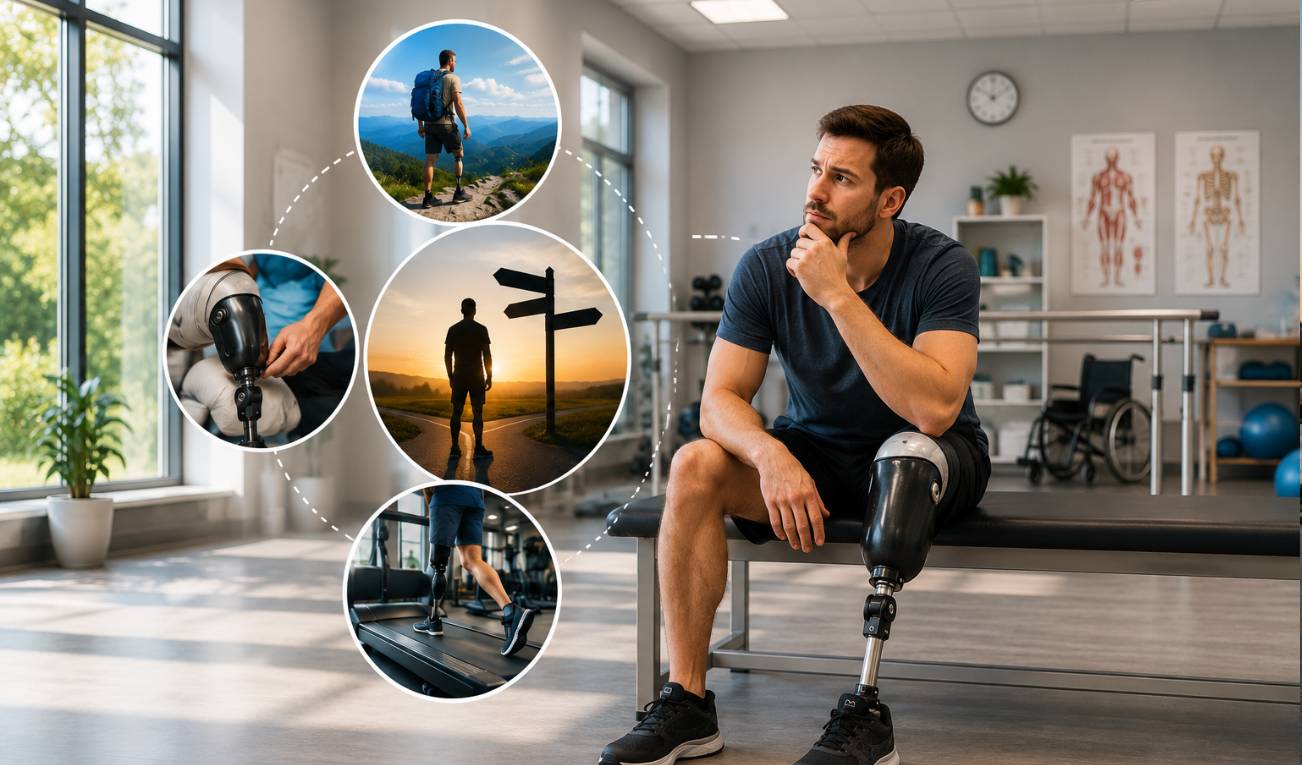
If you have recently had a leg amputation or you are preparing for one, the decision to get a prosthetic leg is one of the most significant steps in your recovery. A prosthetic leg helps you regain mobility, return to daily activities, and rebuild your independence. But getting the right prosthesis takes more than one fitting appointment. You need to understand what you should know before getting a prosthetic leg to expect at every stage, from candidacy to long-term care.
This guide walks you through everything you need to know before getting a prosthetic leg.
Are You a Good Candidate?
Not every person who has had a leg amputation automatically qualifies for a prosthetic leg. Several medical and personal factors determine your candidacy, and your care team will carefully evaluate them all.
Soft tissue coverage. Adequate soft tissue around the residual limb cushions the remaining bone and reduces discomfort during prosthetic use. Without it, fitting becomes significantly more difficult.
Amputation level. Below-the-knee amputations generally allow for easier adaptation to a prosthesis. When the knee joint remains intact, the prosthetic leg requires less effort to move and supports greater overall mobility. Above-the-knee amputations involve more complex prosthetic systems and typically require a longer adjustment period.
Cause of the amputation. People who lost a limb due to trauma and were physically active before often adapt more quickly to a prosthesis. If the amputation resulted from a condition like diabetes or peripheral vascular disease, the health of the remaining limb and circulatory function will play a larger role in the fitting process.
Your physical health and activity level. Your strength, cardiovascular health, and overall fitness level all affect how well you will control and use your prosthetic leg.
The decision to move forward with a prosthetic leg is a collaborative process between you and your medical team. Your care team will help you weigh your goals, your physical readiness, and your day-to-day lifestyle to reach the right decision.
Understanding the Parts of a Prosthetic Leg
Once your doctor prescribes a prosthetic leg, it helps to understand how its core components work together.
The Prosthetic Leg Structure: Prosthetists build modern prosthetic legs from lightweight yet durable materials such as carbon fiber. The design varies depending on the amputation level. Some designs include functional knee and ankle joints, while others do not.
The Socket: It is the interface between your residual limb and the prosthesis. Prosthetists create it as a precise custom mold of your limb, designed to distribute pressure evenly and keep the prosthesis secure. A poorly fitting socket leads to discomfort, skin breakdown, and instability. Getting the fit right is one of the most critical steps in the entire process.
The Suspension System The suspension system holds the prosthesis in place on your body. Your prosthetist may recommend sleeve suction, vacuum-assisted suspension, or a pin-and-lanyard locking system, depending on your limb shape, activity level, and personal comfort.
At Prosthetic One, the clinical team offers a range of specialty components, including Vacuum-Assisted Suction Suspension (Harmony), Microprocessor Knees such as the C-Leg, the Echelon Hydraulic Foot, and the High-Fidelity Interface socket. Your prosthetist will help you select the right combination based on your specific functional goals.
Your Prosthetist: A Long-Term Clinical Partner
Your prosthetist is the clinician who designs, fabricates, and fits your prosthetic leg. This professional relationship often extends over many years, particularly as your limb shape changes and your activity goals evolve.
In the early stages, you will attend frequent appointments for adjustments and refinements. As your limb stabilizes and your strength builds, those appointments become less frequent. Even so, you will return when your prosthesis needs updating or when you notice changes in fit, comfort, or stability.
At Prosthetic One, the team works in close coordination with your physician and physical therapist to ensure every aspect of your prosthetic device matches your needs. The goal goes beyond basic function. It includes comfort, confidence, and the ability to get back to the activities that matter to you.
What Rehabilitation Looks Like
Getting fitted for a prosthetic leg is only the beginning. Rehabilitation is the process that builds the strength, balance, and confidence you need actually to use it well.
Your rehab program will typically focus on:
- Strengthening your residual limb and intact leg. Your remaining leg takes on a significant additional load during ambulation. Keeping it strong and healthy protects your long-term mobility.
- Building cardiovascular fitness. Walking with a prosthesis requires more energy than walking without one. Gradually improving your endurance helps you progress and avoid fatigue-related setbacks.
- Gait training. Physical therapists guide you through learning how to bear weight, shift your center of balance, and move safely across different surfaces and environments. This takes time, and progress looks different for every person.
Depending on your amputation level and your goals, you may also work with an occupational therapist to regain independence in daily tasks. Prosthetic One’s pre-prosthetic management service also helps prepare your body for the demands of wearing a prosthesis before your fitting even begins.
Common Challenges to Prepare For
Even after a successful fitting and rehabilitation, some challenges are common. Knowing about them early helps you address them before they become larger problems.
Residual limb shape changes. Your limb will change in size and shape over time, especially in the months after amputation. These changes directly affect how the socket fits and may require adjustments or a new socket entirely.
Skin irritation and breakdown. Pressure and friction at the socket interface can cause skin problems if you do not monitor your limb regularly. Checking your skin daily and keeping the residual limb clean significantly reduces this risk.
Sweating inside the socket. Perspiration affects both fit and comfort. Your prosthetist can suggest liners, moisture-wicking materials, or different suspension systems to manage the issue effectively.
Outgrowing your current prosthesis. As you become more active, your current device may no longer match your lifestyle. Most people need a new prosthesis every three to five years, though this varies based on activity level and body changes.
Read more: How Advanced Prosthetic Foot and Ankle Technology Is Redefining Human Mobility?
Ready to Take the Next Step?
Getting a prosthetic leg is a major decision, but it is one that thousands of people make each year with strong outcomes. The right information, the right care team, and the right prosthetic components build the foundation for a real recovery.
At Prosthetic One, the team serves patients across the Memphis Metro, Dallas-Fort Worth, and Atlanta Metro areas, offering custom prosthetic fittings, specialty components, and dedicated pre-prosthetic management. They accept Medicare, Medicaid, and most private insurance plans.
If you have questions or you are ready to explore your options, call Prosthetic One at 1-866-967-7767 or book an appointment through their website. Life with an artificial limb is entirely possible, and with the right support, it can look a lot like the life you lived before.