

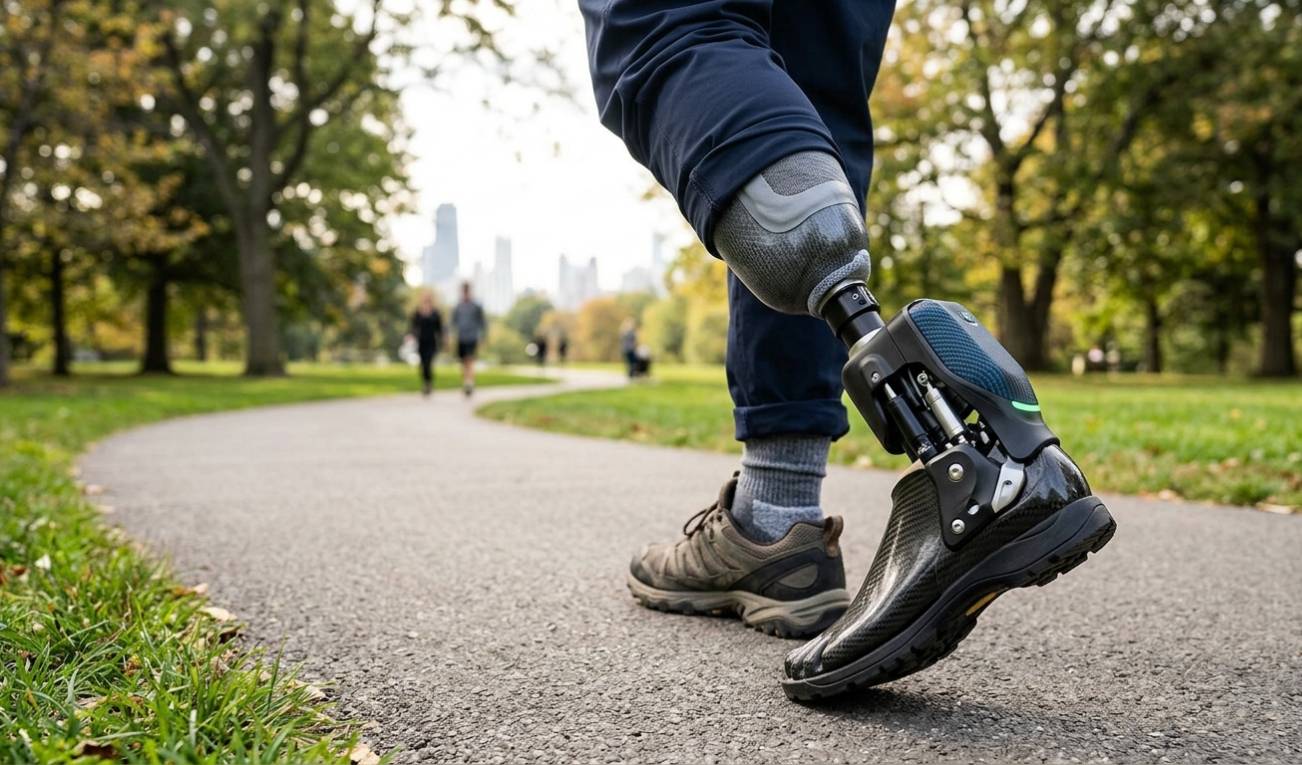
The field of Advanced prosthetic foot and ankle technology is evolving at a steady pace, driven by advances in engineering, material science, and digital health. Modern prosthetic solutions no longer aim only to restore basic mobility. They now focus on improving gait efficiency, reducing fatigue, and supporting a more natural walking experience. This shift reflects a broader goal: helping users regain independence and quality of life with minimal compromise.
The Problem: Limitations of Traditional Prosthetics
Conventional prosthetic feets and ankles often provide limited adaptability. Many designs rely on passive systems that cannot adjust to changing terrains or walking speeds. Users frequently report issues such as uneven gait, increased energy expenditure, and discomfort over long periods.
Research published in the Journal of Rehabilitation Research and Development shows that individuals using traditional prosthetic feet can expend up to 20–30% more energy while walking compared to able-bodied individuals. This inefficiency creates long-term physical strain and limits daily activity levels.
Manufacturers and researchers now address these challenges through smarter, more responsive designs.
1. Microprocessor-Controlled Prosthetic Ankles
One of the most significant developments in prosthetic foot and ankle systems is the integration of microprocessor technology. These systems use sensors to detect movement patterns, walking speed, and changes in terrain in real time.
The microprocessor automatically adjusts the ankle’s resistance and positioning. This creates a smoother transition between steps and improves balance.
A study published in Prosthetics and Orthotics International found that microprocessor-controlled ankles improve walking symmetry and reduce the risk of falls, particularly on uneven surfaces.
Key benefits include:
- Real-time adaptability to terrain
- Improved gait symmetry
- Reduced cognitive effort while walking
These systems work especially well for active users who navigate varied environments daily.
2. Energy-Storing and Returning (ESAR) Feet
Energy-storing and returning feet have become a standard in modern prosthetics. These designs use carbon fiber materials to store energy during the stance phase and release it during push-off.
This mechanism mimics the natural function of the human ankle-foot complex.
Clinical studies show that ESAR feet improve walking efficiency and reduce metabolic cost. According to research published in Gait & Posture, users experience better forward propulsion and less fatigue with these designs compared to rigid prosthetic designs.
Advancements in this category now focus on optimizing stiffness and flexibility based on user weight, activity level, and walking style.
3. Powered Prosthetic Ankles
Powered prosthetic ankles represent a major step forward in biomechanical replication. Unlike passive systems, these devices actively generate motion using motors and sensors.
They provide additional push-off power, which helps users walk faster and with less effort.
A study conducted by the Massachusetts Institute of Technology (MIT) demonstrated that powered ankles can reduce energy expenditure by up to 10% compared to passive devices. This improvement makes a noticeable difference in daily mobility.
These devices are particularly beneficial for:
- Individuals with higher activity demands
- User who walk long distances regularly
- People navigating slopes or stairs frequently
Despite their advantages, powered systems remain more expensive and require regular maintenance.
4. Customization Through 3D Printing
3D printing has introduced a new level of customization in prosthetic foot and ankle design. Traditional manufacturing methods often limit personalization due to cost and complexity.
With additive manufacturing, clinicians can create prosthetics tailored to the user’s exact anatomical and functional needs.
This approach offers several advantages:
- Faster production timelines
- Reduced material waste
- Improved comfort and fit
A report by Wohlers Associates highlights that 3D printing in medical devices continues to grow at a double-digit annual rate, reflecting increasing adoption.
Customization also improves long-term outcomes. A well-fitted prosthetic reduces pressure points and minimizes the risk of skin complications.
5. Smart Sensors and Data Integration
Modern prosthetic systems now incorporate smart sensors that track user activity and performance. These sensors collect data on gait patterns, step count, and load distribution.
Clinicians use this data to make informed adjustments to the prosthetic.
Some systems connect to mobile applications, allowing users to monitor their own progress. This creates a more interactive rehabilitation process.
Research in IEEE Transactions on Neural Systems and Rehabilitation Engineering shows that data-driven adjustments can significantly improve gait efficiency over time.
This trend reflects a broader move toward personalized, data-informed healthcare.
6. Lightweight and Durable Materials
Material innovation continues to play a critical role in prosthetic development. Carbon fiber remains widely used due to its strength-to-weight ratio, but newer composites and alloys are also emerging.
Manufacturers now prioritize:
- Reduced weight for easier movement
- Increased durability for long-term use
- Resistance to environmental factors such as moisture and heat
Lighter prosthetics reduce strain on the residual limb and improve overall comfort. This directly impacts user compliance and daily wear time.
7. Improved Shock Absorption and Stability
Modern prosthetic feet and ankles now include advanced shock absorption systems. These features help reduce impact forces during walking, especially on hard surfaces.
Improved shock absorption:
- Protects joints such as the knee and hip
- Enhances comfort during prolonged use
- Supports a smoother gait cycle
Stability features have also improved. Multi-axial designs allow movement in multiple directions, which helps users maintain balance on uneven terrain.
8. Focus on Aesthetic and Psychological Factors
The industry now recognizes that prosthetics affect more than physical mobility. Aesthetic design and user confidence also play important roles.
Manufacturers offer more natural-looking prosthetics, as well as customizable cosmetic covers. Some users prefer designs that reflect personal style rather than concealment.
This shift supports psychological well-being and social confidence. Studies in rehabilitation psychology show that improved self-image can positively influence overall recovery outcomes.
9. Integration with Rehabilitation Programs
Modern prosthetic foot and ankle systems work closely with structured rehabilitation programs.
Technology alone cannot ensure optimal outcomes.
Clinicians now emphasize:
- Gait training with advanced prosthetics
- Strength and conditioning exercises
- Continuous monitoring and adjustment
A coordinated approach improves long-term success rates and helps users adapt more quickly to new devices.
10. Cost and Accessibility Challenges
Despite these advancements, cost remains a significant barrier. High-end prosthetic systems, especially powered and microprocessor-controlled devices, can be expensive.
Access varies widely across regions. Many users still rely on basic prosthetics due to financial constraints.
Efforts to address this issue include:
- Development of low-cost alternatives
- Government and insurance support programs
- Non-profit initiatives focused on accessibility
The goal is to balance innovation with affordability.
Conclusion
The latest trends in prosthetic foot and ankle technology focus on functionality, adaptability, and user-centered design. Microprocessor control, powered movement, and smart data integration are redefining what prosthetics can achieve.
At the same time, advancements in materials and manufacturing methods improve comfort and customization. These changes support a more natural walking experience and reduce physical strain.
However, challenges such as cost and accessibility remain. The future of this field depends on making advanced solutions available to a wider population.
The direction is clear. Prosthetic foot and ankle systems are moving beyond basic support toward intelligent, responsive devices that align closely with human biomechanics. This shift holds the potential to significantly improve mobility outcomes for users worldwide.
If you have questions about prosthetic foot and ankle or are interested in exploring prosthetic options, contact Prosthetic One to schedule a consultation and learn which solutions may work best for you.