

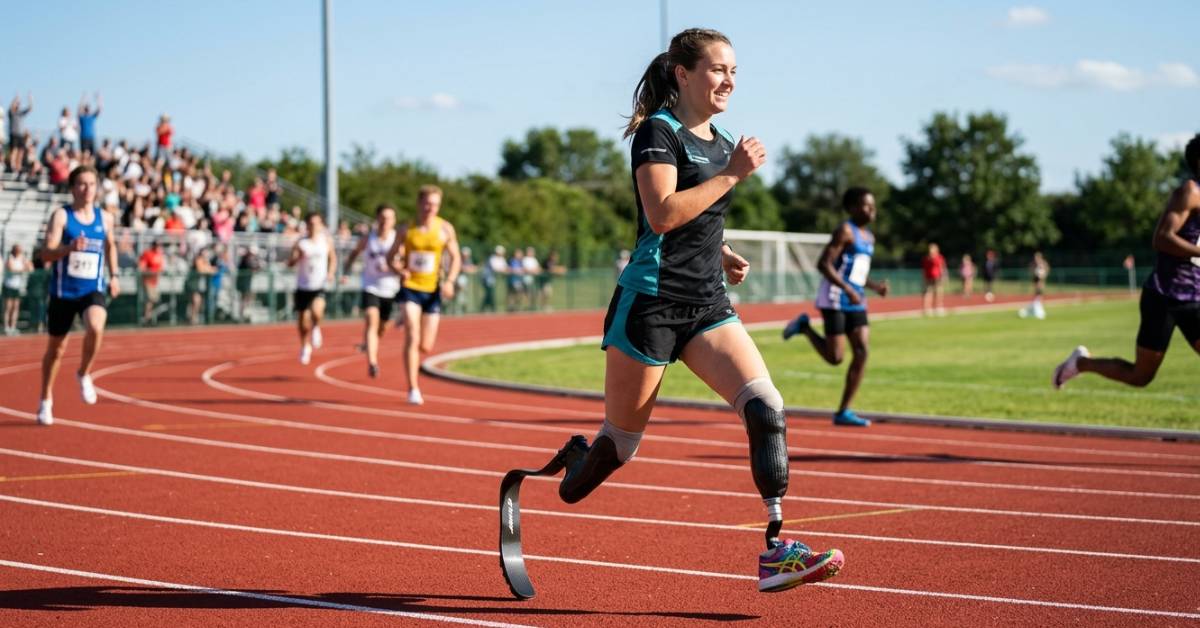
For active amputees, choosing the right prosthetic isn’t just about mobility; it’s about reclaiming performance, independence, and identity. Most newcomers quickly realize that manufacturers design many prosthetics for basic utility rather than active movement or sport.
From running blades to microprocessor knees, the options are advanced but overwhelming. Without the right knowledge, it’s easy to invest in the wrong solution or underestimate what’s actually possible.
This guide breaks down the best prosthetics for active amputees, combining real-world application, advanced technology, and expert insights so you can make informed decisions based on your lifestyle, not guesswork.
Understanding Sport-Specific Prosthetics
Not all prosthetics are designed equally, and that becomes obvious the moment you step into a high-performance environment.
Running Blades: Built for Speed and Efficiency
Running prosthetics are among the most recognizable and specialized devices used by athletes.
There are two primary types:
- C-shaped blades – Designed for long-distance running, these blades offer smoother transitions and sustained energy return, making them ideal for endurance athletes.
- J-shaped blades – Designed for sprinting and explosive movements, these offer greater stiffness and faster energy release, enabling rapid acceleration.
Material plays a critical role here. Most blades are made from carbon fiber, which stores kinetic energy during foot strike and releases it during toe-off. Thicker carbon fiber increases stiffness and energy return, while thinner configurations allow for more flexibility and control.
The right choice depends on body weight, speed requirements, and the athlete’s specific goals.
Waterproof & Aquatic Prosthetics
Water environments demand entirely different engineering priorities. Aquatic prosthetics are designed with:
- Corrosion-resistant titanium components
- Drainage systems to prevent water retention
- Optional fin attachments for propulsion
These devices are commonly used in swimming, surfing, and diving. Unlike traditional prosthetics, they often prioritize durability and simplicity over complex electronics, since water exposure can compromise sensitive components.
High-Impact & Multi-Sport Prosthetics
For sports like basketball, tennis, or football, movement is unpredictable and multidirectional. These prosthetics focus on:
- Lateral (side-to-side) stability
- Shock absorption for repeated impact
- Multi-axial movement to handle quick direction changes
Split-toe designs and reinforced structures improve balance and agility, making them suitable for athletes who need versatility across different activities.
Winter Sports Prosthetics
Cold-weather sports introduce additional challenges, including freezing temperatures and uneven terrain. Specialized prosthetics for skiing and snowboarding include:
- Cold-resistant materials
- Integrated ski or snowboard boot systems
- Shock-absorbing knee components
These designs ensure stability, control, and safety in environments where standard prosthetics would fail.
Read more: Can You Swim With a Prosthetic Leg?
Advanced Technology Behind Modern Prosthetics
Modern prosthetics are no longer passive tools. They actively respond to movement, terrain, and user behavior.
Microprocessor-Controlled Knees (MPKs)
Devices like the Ottobock C-Leg and Össur Rheo Knee represent a major leap in prosthetic technology.
These systems use sensors such as gyroscopes and accelerometers to:
- Adjust resistance in real time
- Adapt to walking speed and terrain changes
- Improve stability and reduce fall risk
For active users, this translates into smoother transitions and greater confidence during movement.
Energy-Storing-and-Returning (ESAR) Feet
ESAR feet utilize carbon fiber to mimic the natural mechanics of a biological limb.
During movement:
- Energy is stored when the foot makes contact with the ground
- That energy is released during push-off
This reduces fatigue, increases efficiency, and enables more dynamic motion, making ESAR technology essential for sports and high-activity users.
Torsion Units
Torsion components allow rotational movement within the prosthetic. This is particularly important for sports involving twisting motions, such as:
- Golf
- Baseball
- Tennis
By absorbing rotational forces, torsion units reduce stress on the residual limb and improve overall comfort and performance.
The Foundation: Socket & Suspension Systems
Even the most advanced prosthetic components are ineffective without a proper fit.
Sport-Specific Socket Design
Sockets are often customized based on the user’s activity.
For example:
- Running sockets allow greater freedom of movement
- Cycling sockets may provide more support and control
Proper design ensures comfort, stability, and optimal force transfer.
Suspension Systems
Two common systems include:
- Vacuum-assisted suction systems
Provide a secure, airtight fit with minimal movement inside the socket. These are preferred for athletes due to their stability during intense activity. - Pin-locking systems
Easier to use but may allow slightly more movement, making them less ideal for high-performance sports.
Modern liners are designed to handle the physical demands of active use.
- Moisture-wicking materials
- Cooling properties
- Reduced friction to prevent skin irritation
Given the increased perspiration during sports, these liners play a critical role in maintaining comfort and preventing injury.
Training, Rehabilitation & Adaptation
A prosthetic alone does not create performance.
Athletes must go through structured rehabilitation and training phases, including:
- Gait training to develop a natural walking pattern
- Strength training to address muscle imbalances
- Gradual progression from walking to sport-specific activity
In reality, performance depends more on training and adaptation than on the prosthetic itself. Without proper conditioning, even the most advanced device cannot deliver its full potential.
Understanding the K-Level System
Prosthetic prescriptions are often guided by the K-Level classification system, which determines a user’s mobility potential.
- K3 (Community Ambulator): Individuals capable of variable speeds and navigating uneven terrain
- K4 (High-Activity User): Athletes and highly active individuals who engage in high-impact activities
Access to advanced prosthetics, including sports-specific devices, is often limited to K3 and K4 users. This system is commonly used by clinicians and insurance providers to determine eligibility.
Cost, Accessibility & Real-World Constraints
High-performance prosthetics come with significant financial considerations.
Typical cost ranges:
- Running blades: $3,500 to $18,000+
- Microprocessor knees: $20,000 to $80,000+
In addition to initial costs, users must account for maintenance, adjustments, and eventual replacements.
Access can also be influenced by:
- Insurance coverage tied to K-Levels
- Availability of trained prosthetists
- Geographic limitations
Many athletes rely on sponsorships, grants, or support programs to access advanced equipment.
Leading Prosthetic Manufacturers
Several companies lead innovation in prosthetics for active amputees.
Össur
Known for its Cheetah series, Össur specializes in high-performance running blades designed for elite athletes.
Ottobock
A global leader in prosthetic technology, Ottobock offers advanced solutions, including the Runner and Challenger feet and microprocessor-controlled knees.
Fillauer
The AllPro foot by Fillauer is widely recognized for its versatility across multiple sports, making it a popular choice for recreational and competitive users alike.
Real-World Athlete Examples
Markus Rehm
A world-class long jumper, Rehm uses a high-performance running blade and has sparked global discussions about the role of prosthetic technology in competitive sports.
Amy Purdy
Purdy’s success in snowboarding highlights how specialized prosthetics can be adapted for extreme environments and demanding conditions.
These examples demonstrate how the right combination of technology, training, and customization can unlock elite performance.
Injury Prevention & Long-Term Health
Active amputees often face unique physical challenges.
Common issues include:
- Joint strain in the intact limb
- Lower back pain
- Skin irritation and pressure sores
Preventative strategies include:
- Regular prosthetic adjustments
- Strength and conditioning programs
- Proper rest and recovery
Maintaining long-term health is essential for sustained performance and quality of life.
Read more: Lifelike Prosthetics: When Technology Becomes Part of You
Conclusion
Choosing the right prosthetic for sports and recreation is not a one-size-fits-all decision. It requires a combination of the right technology, proper fit, structured training, and expert guidance.
For active amputees, the goal is not just mobility; it is performance, confidence, and long-term well-being.
At Prosthetic1, we understand that every individual has unique needs and goals. Whether you are exploring recreational activity or competitive sports, the right prosthetic solution can transform what is possible.
Connect with our experts today to find a prosthetic solution tailored to your lifestyle and performance goals.