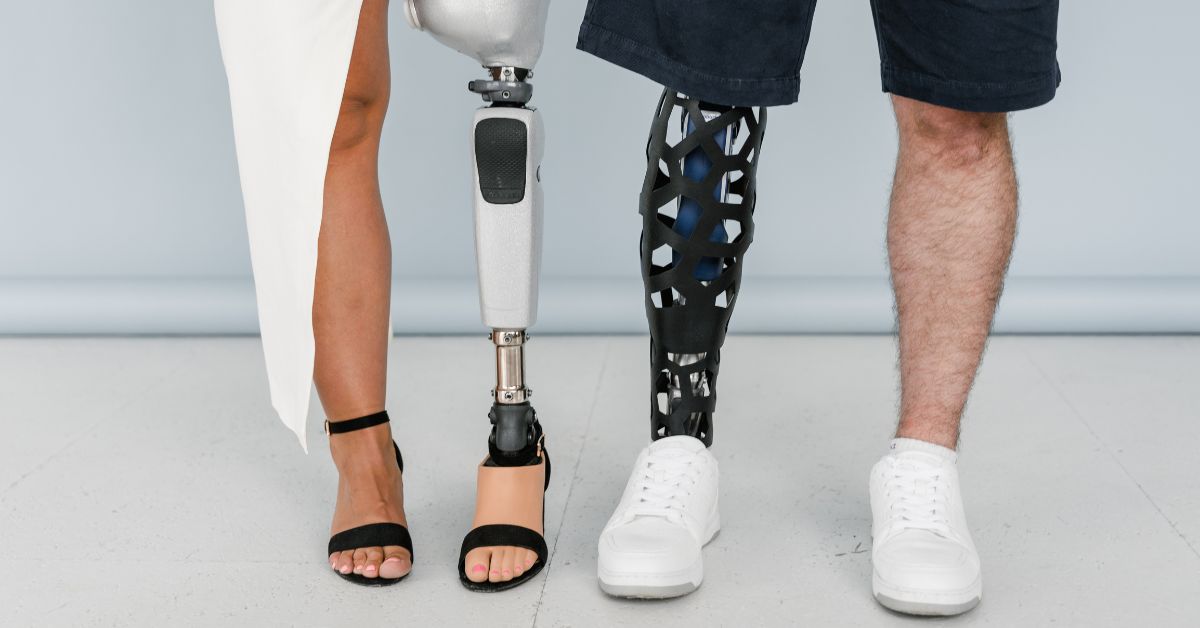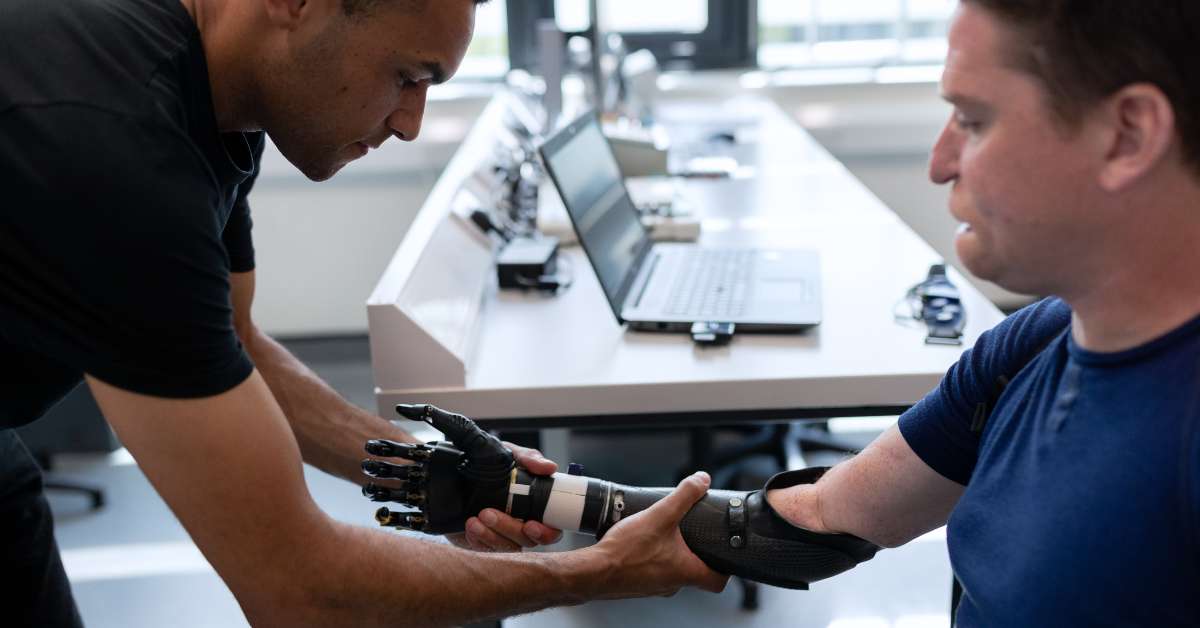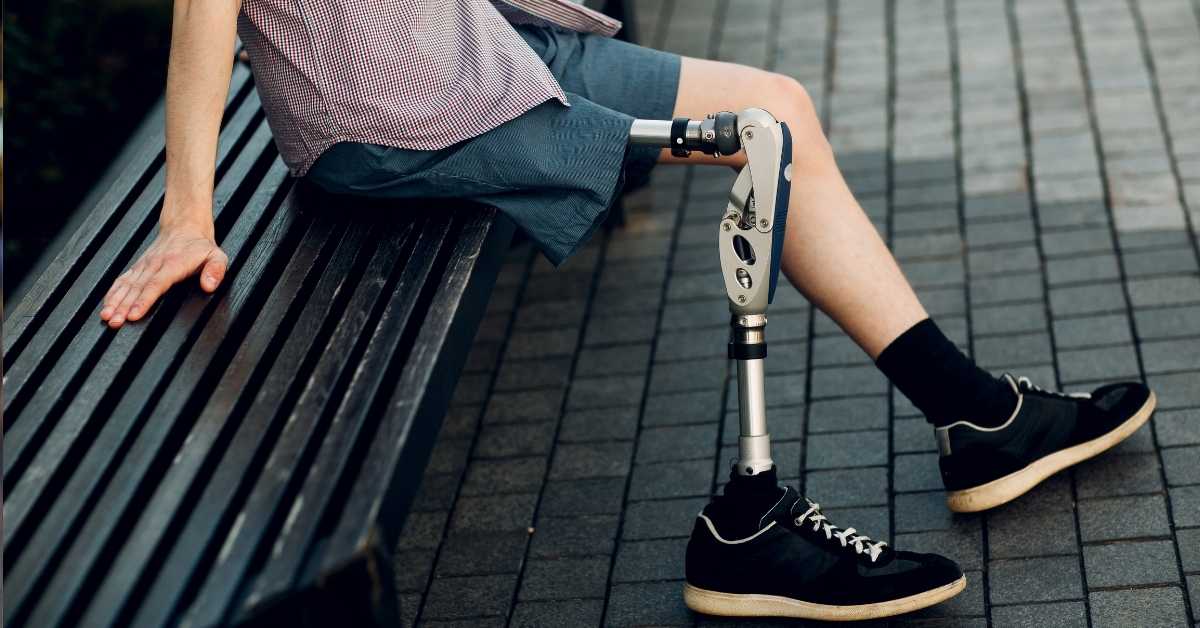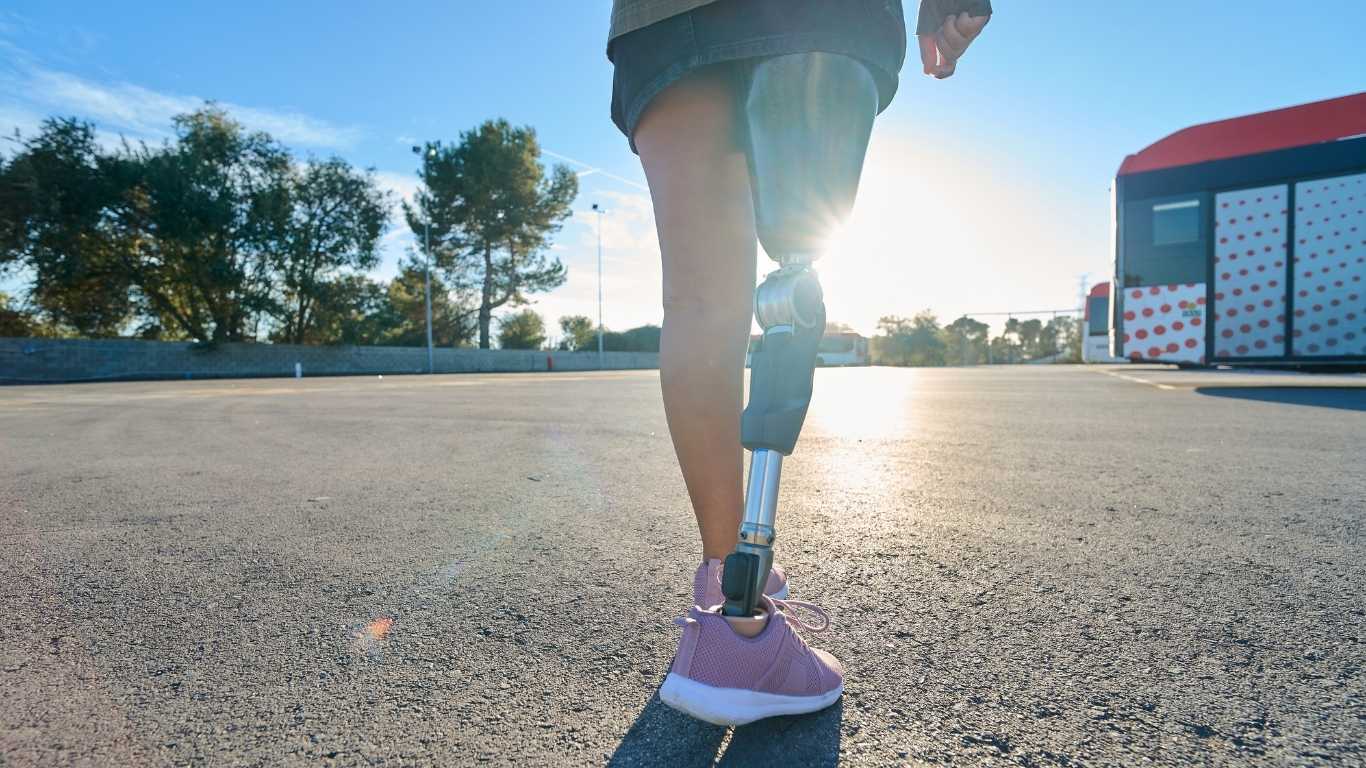

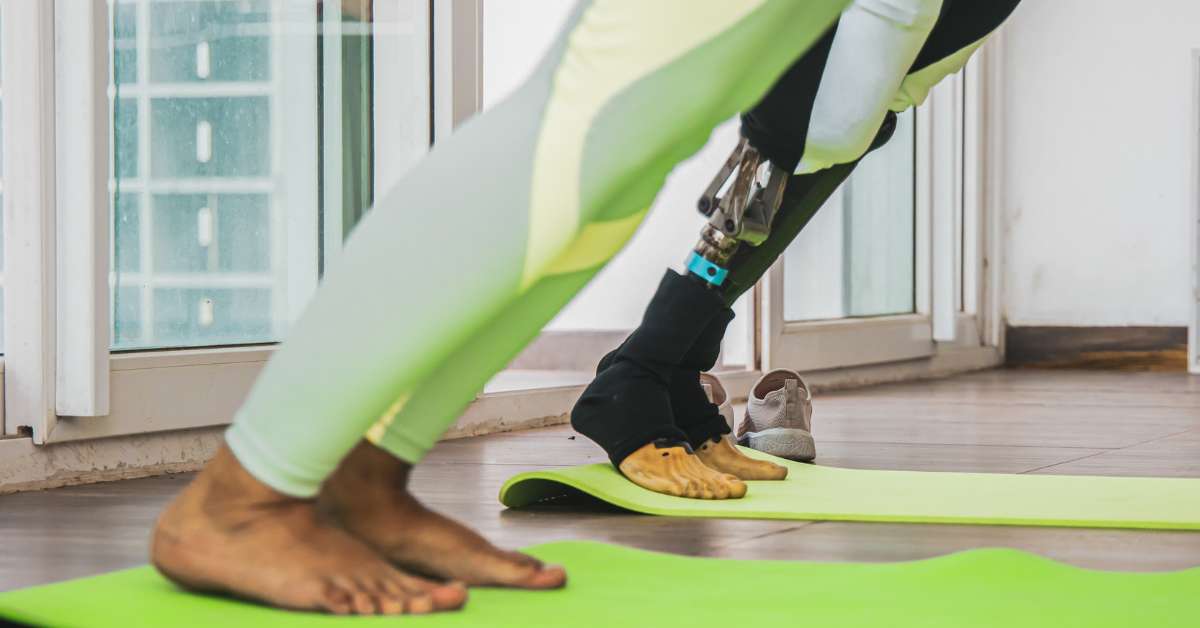
When we think about mobility, we often focus on the “big” movements, such as swinging a leg forward or climbing stairs. However, the foundation of every movement actually begins at the very bottom. The human foot and toes help you balance your body every second you stand or walk.
For those who experienced a foot or toe amputation, the goal is rarely just “to walk again.” It is to walk with confidence, without pain, and with a natural rhythm. And that’s where prosthetics help. Understanding how these prostheses work is the first step towards reclaiming your independence and confidence. Modern prosthetic technology has evolved far beyond simple filters. Nowadays, devices mimic the intricate biomechanics of the human body.
Why Toes and Feet Matter for Mobility?
A common misconception is that losing a toe or part of the foot has minimal impact on daily life. But, in reality, the feet and toes are the body’s primary stabilizers. They function as a “tripod,” with weight distributed between the heel, the base of the small toe, and the base of the big toe.
When one part of that tripod is missing, your center of gravity shifts, often leading to secondary pain in the hips, knees, and lower back.
The toes, particularly the “great toe” (big toe), play a starring role in what prosthetists call the “toe-off” phase of walking. As your heel leaves the ground, your toes flex to provide the final push needed to propel your body forward. Without a prosthesis to replicate this lever action, a patient’s stride shortens and becomes less efficient, requiring significantly more energy just to cross the room. By using a custom-fitted prosthesis, we can restore that lever, allowing for a smoother, more natural “roll-over” during every step.
Energy Return and Carbon Fiber Technology
In the world of foot prostheses, the most significant breakthrough has been the shift from rigid, heavy materials to high-performance carbon fiber. While early designs were often passive and stiff, modern carbon fiber foot prosthetics act much like the biological Achilles tendon.
How Energy Storage and Return (ESAR) Works:
- Shock Absorption: When your heel hits the ground, the carbon fiber flexes, absorbing the impact that would otherwise travel up into your knee and hip.
- Power Conservation: As you move through your stride, the material stores that energy.
- The “Spring” Effect: At the moment of push-off, the carbon fiber springs back into its original shape, releasing the stored energy to propel you forward.
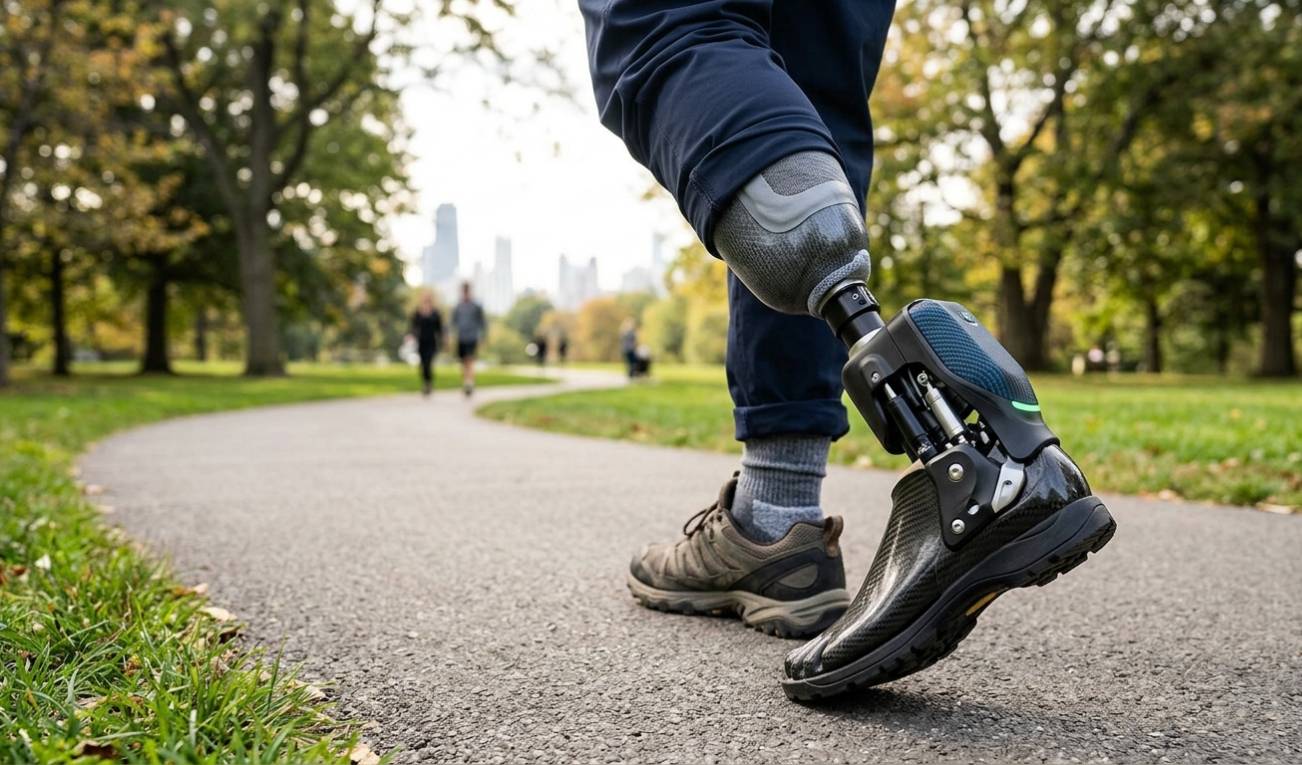
For patients, this means walking requires less physical effort, resulting in less fatigue at the end of the day. Whether you are navigating a busy grocery store or walking through a local park, this “dynamic response” makes every step feel lighter and more fluid.
The High-Fidelity Advantage: Why the Interface Matters
No matter how advanced a toe prosthesis or foot prosthesis is, its effectiveness depends entirely on how it connects to your body. Traditional sockets often encapsulate the limb in a way that can feel restrictive or allow the bone to “slide” inside the soft tissue. The Hi-Fi Interface is different. It uses a patented design of alternating compression and release zones that:
- Stabilize the Bone: As you move closer to the underlying bone, it provides a secure connection that feels like a natural extension of your body.
- Increase Control: When the bone is stabilized, you have better control over your foot prostheses, making it easier to navigate uneven terrain or change directions quickly.
- Enhance Comfort: The “release zones” allow your soft tissue to move and breathe, reducing the heat and pressure build-up common in standard designs.
By combining this advanced interface with a custom-molded toe prosthesis, we ensure that your device stays firmly in place, preventing the “migration” of remaining toes and protecting sensitive skin from friction.
Restoring Your Lifestyle: Comfort and Footwear
One of the most common questions we hear is: “Will I have to buy special shoes?” The beauty of modern foot and toe prostheses lies in their versatility. The versatility of modern foot and toe prostheses has largely made this a thing of the past.
Because these devices are typically custom-sculpted to a patient’s specific anatomical measurements, they are designed to mirror the volume and shape of a natural foot. This allows for a seamless fit into most standard footwear. Whether the goal is to wear supportive athletic shoes for exercise or professional dress shoes for a formal event, a well-designed prosthesis ensures the shoe fits securely and functions as intended.
Beyond physical utility, toe prostheses offer a significant psychological benefit. Made from high-grade medical silicone, these prosthetics can be artistically matched to an individual’s skin tone and incorporate realistic details such as toenails and skin texture. This level of craftsmanship allows individuals to feel more confident wearing open-toe shoes, sandals, or even going barefoot at the beach.
Maintaining Your Prosthetic for Long-Term Health
To ensure a prosthesis continues to provide optimal balance and mobility, consistent maintenance is essential. Since these devices are in frequent contact with the skin, a simple daily routine is recommended:
- Hygiene: Cleaning the prosthetic and the interface with mild soap and water prevents skin irritation and bacterial buildup.
- Skin Monitoring: Checking the limb daily for pressure points or changes in skin integrity is vital for long-term comfort.
- Professional Assessment: Regular visits to a prosthetist ensure that alignment remains correct and that the materials, whether carbon fiber or silicone, continue to provide the necessary support.
Take the Next Step with Prosthetic One
A loss of a foot or toe changes your life, but it doesn’t have to define your movement. By combining advanced carbon fiber technology with our specialized High-Fidelity Interface, we help restore the balance and gait symmetry you need to move through the world with ease.
If you’re ready to see how a custom foot prosthesis or toe prosthesis can improve your mobility, the team at Prosthetic One is here to guide you. From initial consultation to final fitting, our goal is to provide the most comprehensive care available.