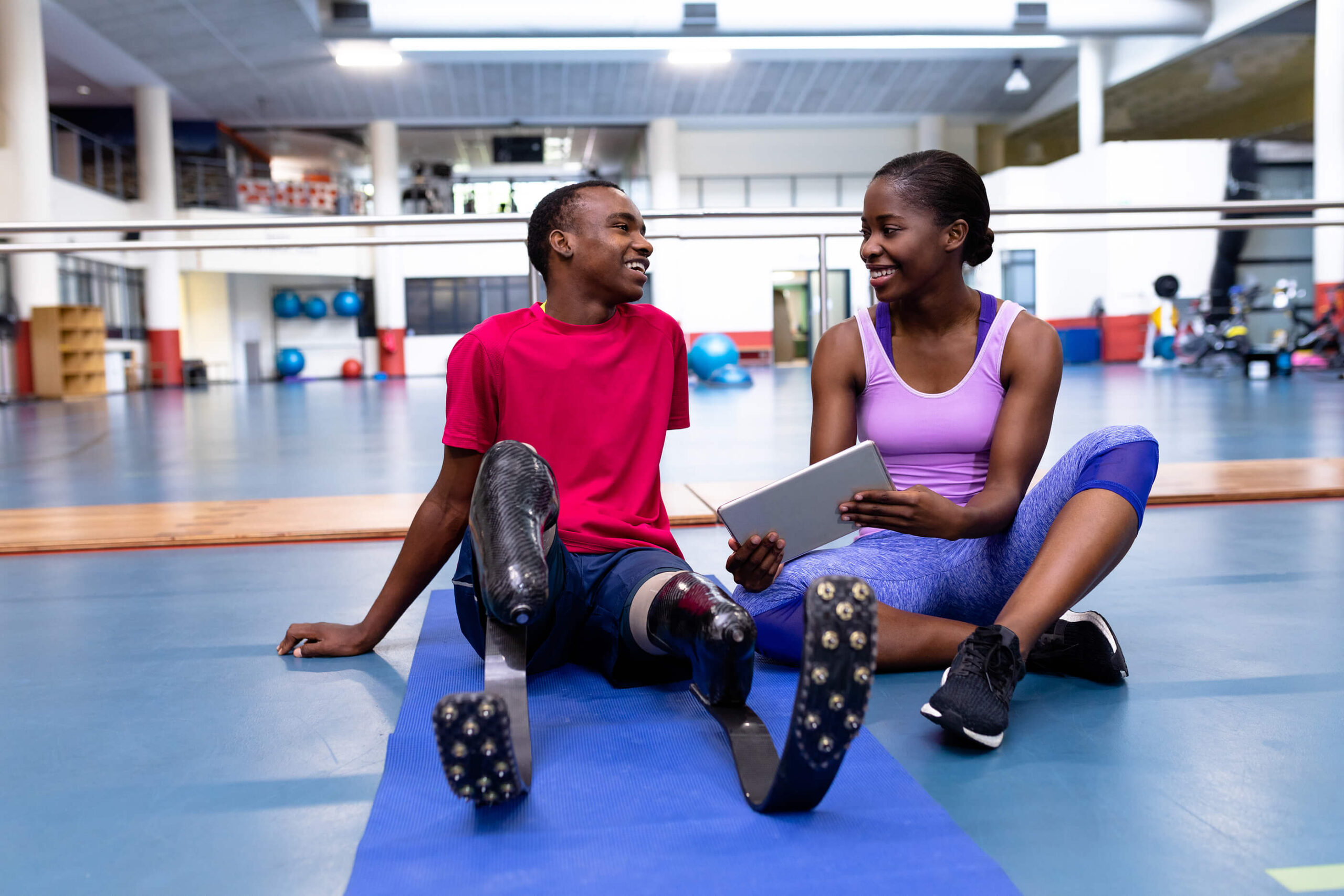

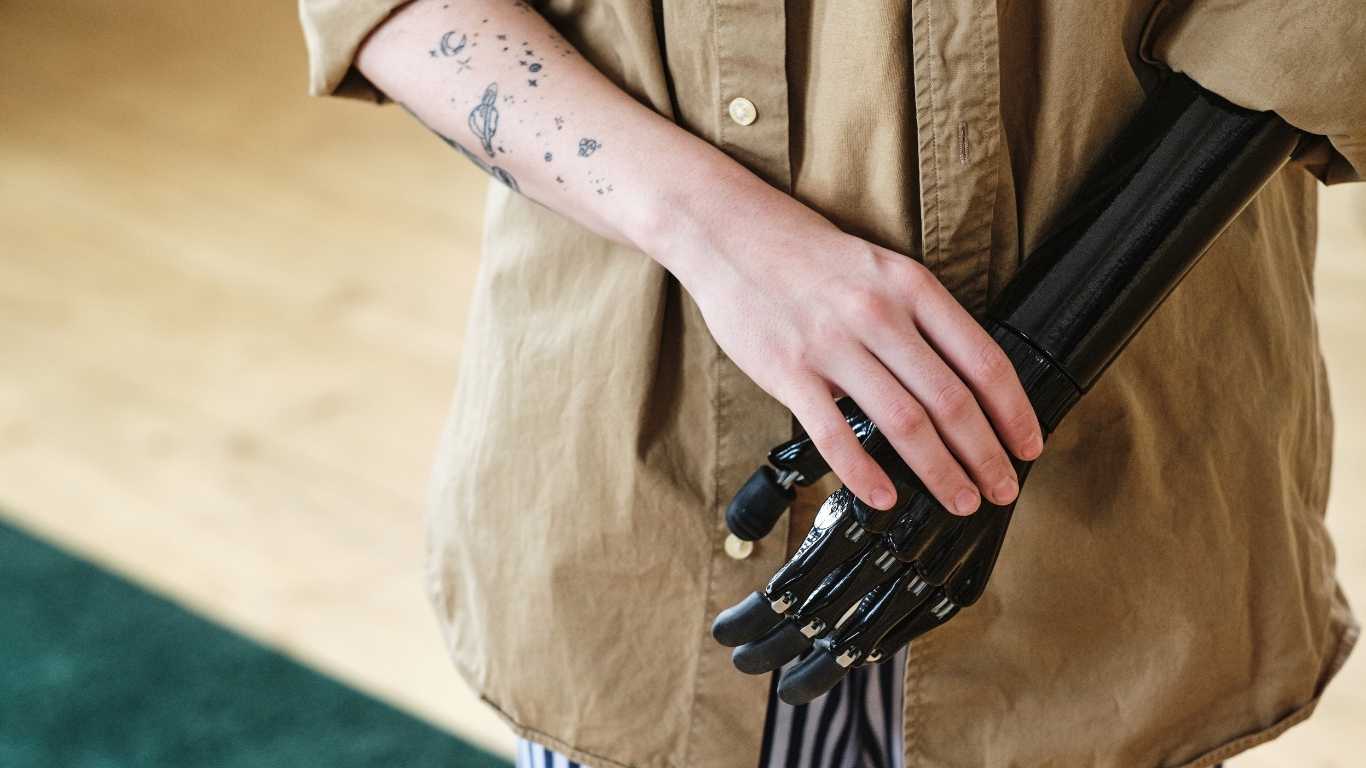
A hand prosthesis is an artificial apparatus created to substitute a lost or non-working hand, aiding individuals in recovering both aesthetics and a variety of movements essential for everyday tasks. It is used by individuals who have lost their hand or fingers because of injury, congenital disorders, disease, or surgical removal. A hand prosthetic serves both aesthetic and practical functions, reinstating autonomy and enhancing life quality via innovative design and control mechanisms.
What is a Hand Prosthetic?
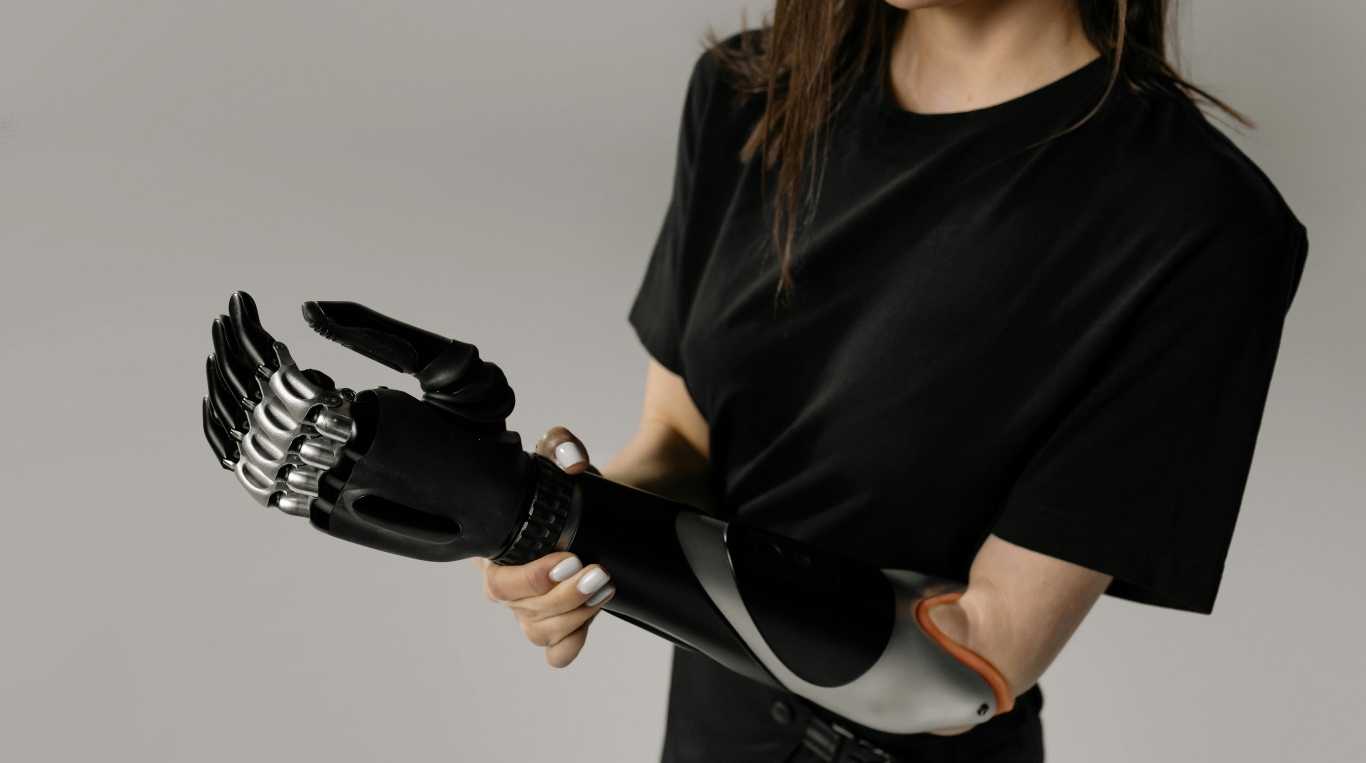
A hand prosthesis, or prosthetic hand, is a tailored artificial substitute for either the entire or a portion of the human hand. It imitates the form, dimensions, and occasionally the hue of the user’s actual hand, created with molds and imprints of the remaining limb. Designs range from simply cosmetic models to advanced mechanical or electronic devices that can replicate natural hand movements. Advancements in technology have created bionic or myoelectric prosthetic limbs that utilize electrical impulses from muscle contractions to manage hand motions, allowing for precise gripping, finger movement, and adaptable grasping akin to a real hand. These devices frequently integrate several degrees of freedom (DOF), mimicking movements across different finger joints to improve agility and adaptability.
Who Requires a Hand Prosthesis?
Hand prosthetics are mainly essential for people who have experienced partial or total hand amputation. Factors comprise:
– Traumatic events or injuries like car crashes, workplace accidents, or trauma from warfare.
– Birth defects in which a hand or fingers are either malformed or missing from the time of birth.
– Health issues like cancer, serious infections, complications from diabetes, or circulatory disorders that require the hand’s amputation.
– Individuals need functional rehabilitation post-amputation to regain autonomy in tasks such as dressing, eating, or writing.
The decision to utilize a hand prosthesis is influenced by the amputation level, the condition of the remaining limb, and the individual’s lifestyle and rehabilitation objectives.
Categories of Hand Prosthetics
Hand prosthetics can be generally divided into three types according to their function and technology:
– Passive Prosthetics: These mainly offer cosmetic restoration without functional movement abilities. They assist users in preserving a natural look and offer mild stability for basic tasks. Passive hands may be still or have restricted flexibility but lack gripping capability.
– Body-Powered Prosthetics: These mechanically driven devices utilize cable and harness systems controlled by shoulder or upper body motions to operate the opening and closing of the hand. They are durable, need little upkeep, and provide fundamental gripping capabilities. Users need to learn how to synchronize their body movements to use these prosthetics efficiently.
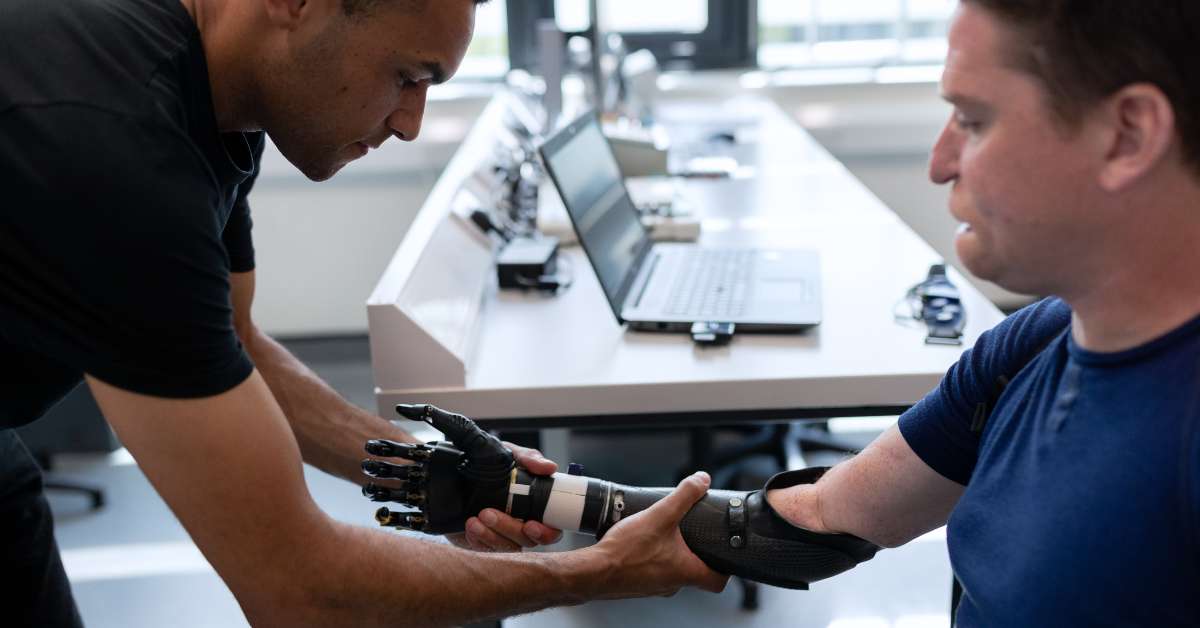
– Myoelectric Prosthetics: Sophisticated electronic prosthetic hands that sense motor neuron signals via sensors placed on the muscles of the residual limb. These signals manage small motors in the prosthetic fingers, allowing intricate movements such as separate finger control, exact grips (pinch, tripod), and adjusting grip strength according to the shape and weight of objects. Myoelectric prosthetics enhance dexterity and functionality but necessitate training, frequent charging, and additional technical maintenance. They frequently provide various degrees of freedom to accurately mimic human hand structure and capabilities.
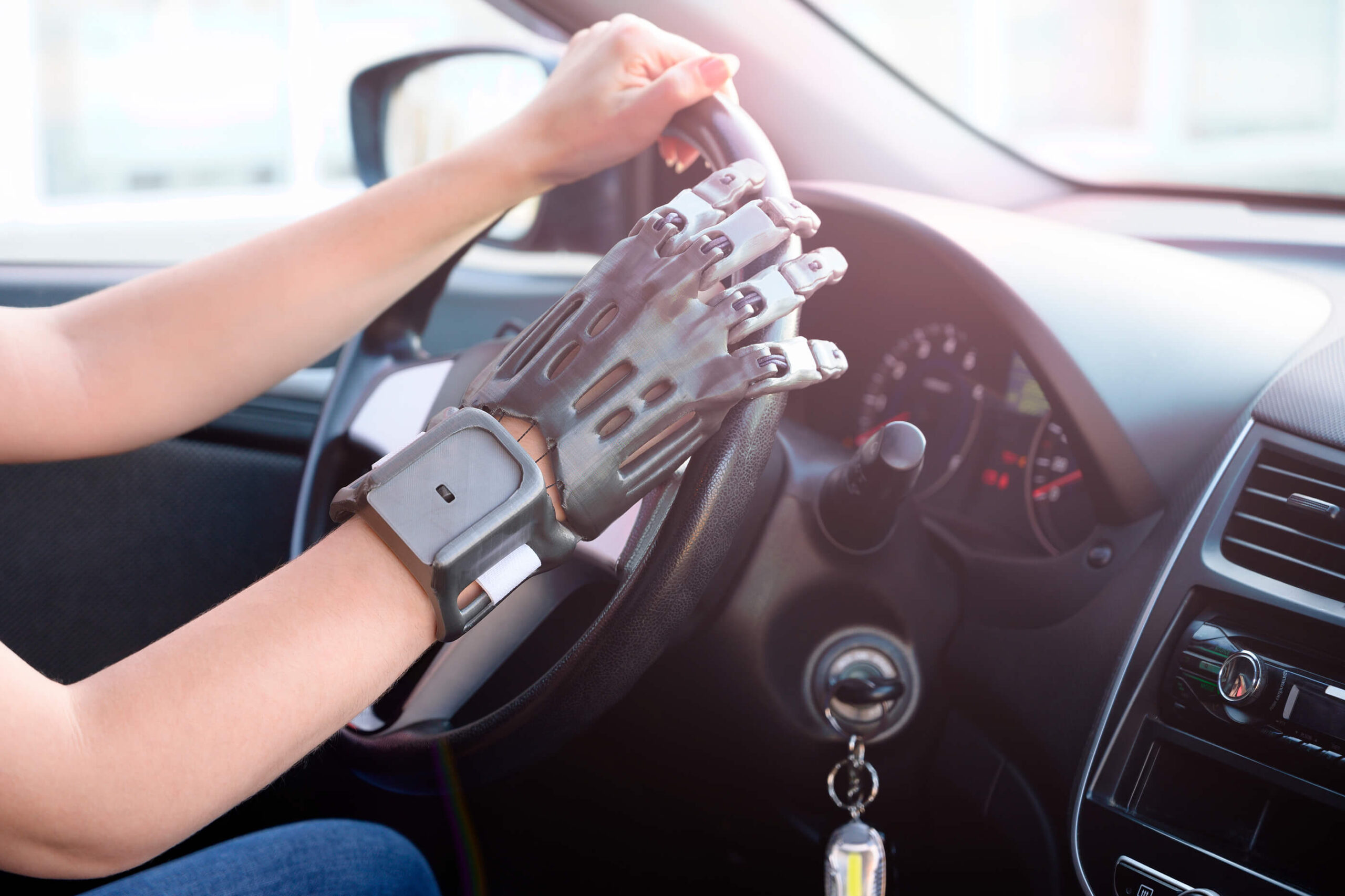
Additional advancements encompass hybrid models, 3D-printed prosthetics, and cutting-edge designs utilizing lightweight materials for improved natural finger movement.
Read more: How Do Amputees Drive with a Prosthesis?
Usage of Hand Prosthetics
Utilizing a hand prosthetic involves several steps, starting with a detailed evaluation, sizing, and adjustment conducted by prosthetists. The process includes creating molds or impressions of the remaining limb to craft a socket interface that ensures comfort and control. Silicone materials can be utilized for partial hands to create a realistic look and flexibility.
Training is essential to optimize the functionality of a hand prosthetic.
– Pre-prosthetic care emphasizes the health and readiness of the residual limb.
– Control training instructs users on how to manage controls, be they body-powered or myoelectric.
– Consistent training improves muscle coordination and hand ability.
– Functional skill training includes rehearsing everyday activities such as grasping cups, typing, or utilizing tools, frequently merging prosthetic and natural hand usage for tasks that require both hands.
Current prosthetic hands allow users to execute a variety of tasks including grasping various items (keys, utensils, phones), typing on keyboards, performing personal hygiene activities, and other complex movements. Devices frequently incorporate sensors for touch pressure, offering feedback to avoid excessive force and mimic natural hand sensitivity. Sophisticated prosthetics could feature coordinated finger movements that enable snug grips for securely holding items with intricate shapes.
Advancements in Hand Prosthetics
Recent advancements aim to improve dexterity, sensory input, and comfort:
– Designs featuring several actuators enable separate finger motion for accurate tasks.
– The utilization of 3D printing technology accelerates the production and personalization of prosthetics.
– Substances like polylactic acid (PLA) offer durability, adaptability, and a lightweight composition.
– Incorporating force sensors aids in replicating touch and pressure experiences.
– Enhanced joint configurations encourage natural thumb motion (flexion, abduction) and finger articulation.
– Certain prosthetics utilize voice commands and additional user inputs to enhance control ease.
These developments allow prosthetic users to carry out intricate two-handed tasks, enhancing autonomy and self-assurance.
Role of Prosthetics
Prosthetic1 focuses on complete prosthetic and orthotic services, delivering advanced hand prosthetics customized to meet personal requirements. Their goal focuses on integrating education, experience, and technology to provide quick responses and top-notch support. The organization prioritizes patient respect, ease, and comprehensive cooperation with healthcare providers to attain the best results. They offer personalized fittings, high-quality materials, and continuous assistance for maintaining and training with prosthetic devices.
In summary, a hand prosthetic is an enhancing tool that reinstates functionality and looks for people with partial or total hand loss. Ranging from basic cosmetic designs to advanced myoelectric devices with numerous degrees of freedom, these prosthetics allow users to regain autonomy in everyday tasks and enhance their overall quality of life. Improvements in materials, sensor technology, and control systems consistently expand the capabilities of prosthetic hand functions. Expert assistance from Prosthetic1 is essential in providing personalized care, enabling users to achieve optimal results with their hand prosthetics.
This thorough grasp of hand prosthetics emphasizes their significance in rehabilitation and functional recovery for various patient requirements.