

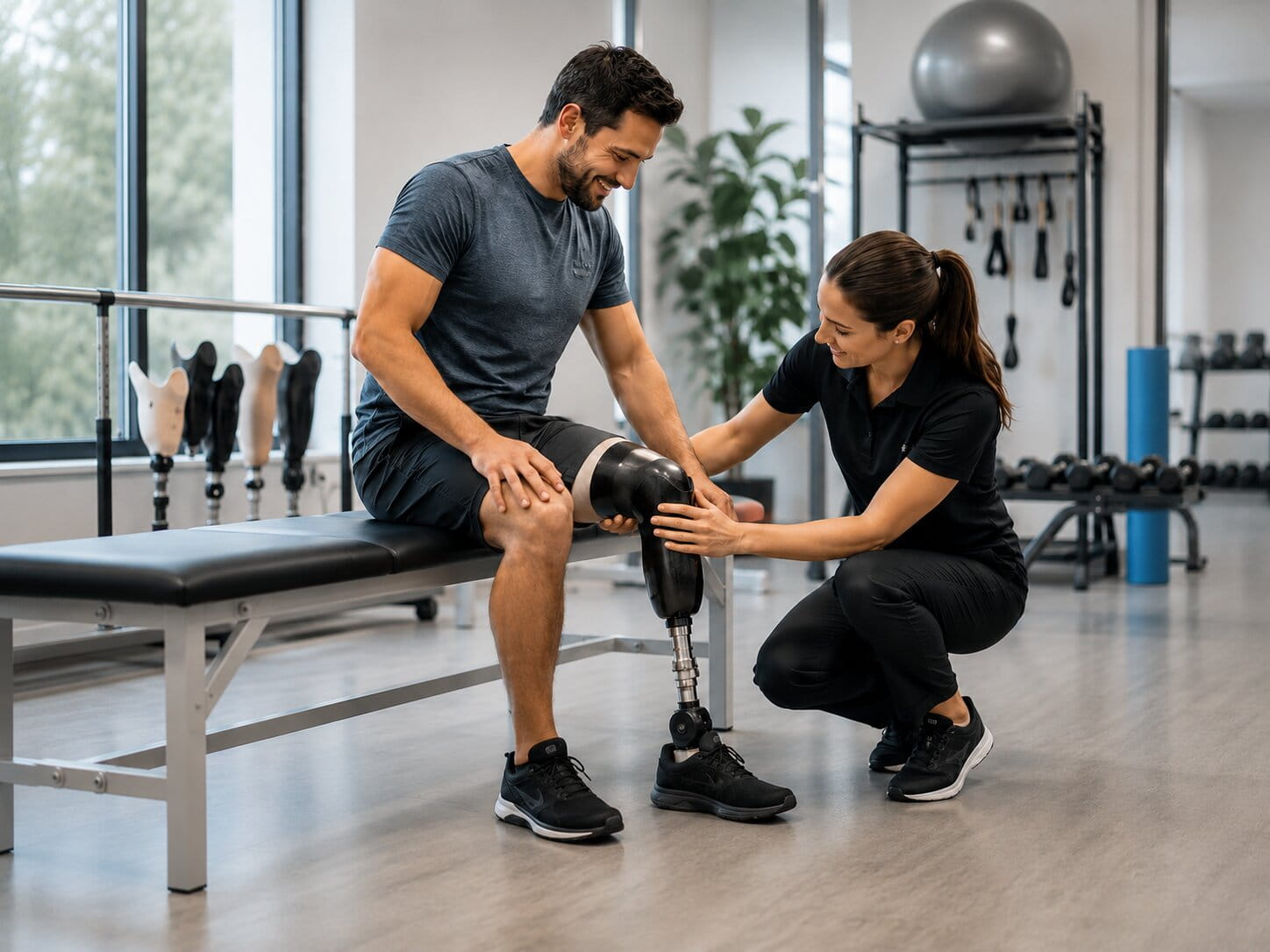
Losing a limb changes daily life in ways most people never think about.Simple tasks like walking through a grocery store, buttoning a shirt, or carrying a cup of coffee can suddenly feel frustrating and exhausting.
Modern prosthetics help people regain mobility, confidence, and independence with solutions designed for different lifestyles and levels of amputation.
Today’s prosthetic limbs do far more than replace missing body parts.
Advanced materials, customized fittings, and smart technology allow many amputees to return to work, sports, travel, and everyday routines with greater comfort and control.
Still, not all prosthetics serve the same purpose. Each type supports a specific level of limb loss and offers different movement capabilities.
In this guide, we’ll break down the four main types of prosthetics, how they work, and how prosthetists help patients choose the right fit for their goals and lifestyle.
What is a Prosthetic Limb?
A prosthetic limb is an artificial device that replaces a missing arm, hand, leg, or foot.
Prosthetics help restore movement, improve balance, and support daily activities after limb loss.
Every prosthetic device is customized based on several factors, including:
- The level of amputation
- Physical activity level
- Occupation and hobbies
- Comfort needs
- Rehabilitation goals
- Overall health and mobility
Modern prosthetics often include lightweight carbon-fiber materials, advanced joint systems, and microprocessor technology that improve movement and stability.
The four primary categories of prosthetics include upper-limb and lower-limb devices.
Each category supports a different type of amputation.
The 4 Main Types of Prosthetics
1. Transradial Prosthetics
A transradial prosthetic replaces an arm below the elbow. People also call this a below-elbow prosthesis.
This type of prosthetic allows users to retain elbow movement, making many daily tasks easier than with higher-level amputations.
Transradial prosthetics can include:
- Body-powered systems
- Myoelectric prosthetics
- Cosmetic prosthetic arms
- Activity-specific devices
Myoelectric prosthetics use electrical signals from muscles in the remaining limb to control hand and wrist movements.
These devices can improve grip control and make motions feel more natural.
Common Benefits
- Preserves elbow movement
- Supports better arm control
- Helps with everyday activities
- Offers lighter-weight designs
Potential Challenges
- Requires training and therapy
- Myoelectric options may need regular charging
- Advanced systems can cost more
2. Transhumeral Prosthetics
A transhumeral prosthetic replaces an arm above the elbow.
This type of prosthetic addresses more complex movement needs because it must support both elbow and hand function.
Patients with above-elbow limb loss often work closely with prosthetists and occupational therapists during rehabilitation.
Learning to control multiple joints takes time and practice.
Modern transhumeral prosthetics may include powered elbows, rotating wrists, and advanced grip systems.
Common Benefits
- Restores upper-limb function
- Supports improved independence
- Advanced systems allow more natural movement
Potential Challenges
- Longer rehabilitation process
- More complex controls
- Heavier than below-elbow devices
Lower-Limb Prosthetics
Lower-limb prosthetics focus heavily on balance, walking stability, and mobility.
These devices help users move more comfortably during daily activities, exercise, and work.
3. Transtibial Prosthetics
A transtibial prosthetic replaces a leg below the knee. People often refer to this as a below-knee prosthesis.
This is one of the most common types of prosthetic limbs because many patients retain their natural knee joint.
Keeping the knee joint often allows smoother movement and easier rehabilitation.
Transtibial prosthetics can support:
- Walking
- Running
- Hiking
- Sports activities
- Everyday mobility
Many active users choose carbon-fiber feet and energy-storing systems to improve movement efficiency.
Common Benefits
- Easier rehabilitation compared to above-knee prosthetics
- Better balance and mobility
- Lower energy use during walking
- Wide range of customization options
Potential Challenges
- Socket discomfort during adjustment periods
- Regular maintenance needs
- Fit changes due to limb volume fluctuations
4. Transfemoral Prosthetics
A transfemoral prosthetic replaces a leg above the knee.
This type of prosthetic includes an artificial knee joint that helps support walking and balance.
Above-knee prosthetics require more energy to use because the natural knee joint is no longer present.
Many patients benefit from advanced knee systems that improve stability and reduce the risk of falls.
Some modern devices include microprocessor-controlled knees that adapt to walking speed and terrain changes in real time.
Common Benefits
- Supports mobility after above-knee limb loss
- Advanced knee systems improve safety
- Allows participation in many daily activities
Potential Challenges
- Higher learning curve
- Greater physical effort during movement
- More adjustments may be needed
Comparison Table: The 4 Main Types of Prosthetics
| Prosthetic Type | Amputation Level | Main Function | Common Benefits | Common Challenges |
|---|---|---|---|---|
| Transradial | Below elbow | Arm and hand movement | Better arm control and mobility | Requires training |
| Transhumeral | Above elbow | Elbow and hand function | Advanced movement options | More complex rehabilitation |
| Transtibial | Below knee | Walking and balance | Easier mobility and rehabilitation | Socket fit adjustments |
| Transfemoral | Above knee | Walking with an artificial knee | Improved stability with modern knees | Higher energy demand |
How to Choose the Right Prosthetic
No single prosthetic works for everyone. Prosthetists evaluate each patient’s physical needs, goals, and lifestyle before recommending a device.
Several factors influence the selection process.
Activity Level
Someone who enjoys hiking, running, or physical labor may need a different prosthetic setup than someone with a more sedentary lifestyle.
Comfort and Fit
A poorly fitted socket can create skin irritation, pain, and instability. Proper fitting plays a major role in long-term success.
Technology Preferences
Some patients prefer simple body-powered systems because they require less maintenance. Others want advanced myoelectric or microprocessor-controlled technology for improved functionality.
Rehabilitation Goals
Some people prioritize returning to sports. Others focus on independent living, work tasks, or easier movement around the home.
A prosthetist helps match the right components to each patient’s goals and physical condition.
Modern Prosthetic Technology Continues to Advance
Modern prosthetics have evolved significantly over the past decade.
Today’s devices offer improved comfort, durability, and movement control.
Some advanced features include:
- Microprocessor knees
- Myoelectric hands
- Bluetooth connectivity
- Lightweight carbon fiber materials
- Energy-return prosthetic feet
- Waterproof prosthetic components
These innovations help many amputees stay active and participate more fully in daily life.
Still, technology alone does not guarantee success. Proper fitting, rehabilitation, and ongoing support remain essential parts of the process.
Read more:What You Should Know Before Getting a Prosthetic Leg
Why Professional Prosthetic Care Matters
Getting a prosthetic involves much more than receiving a device. Long-term comfort and mobility depend on regular adjustments, expert fitting, and personalized rehabilitation support.
An experienced prosthetist helps patients:
- Select the right prosthetic type
- Improve comfort and alignment
- Address fit concerns
- Adapt devices as needs change
- Support rehabilitation goals
As activity levels and physical conditions change over time, prosthetic adjustments often become necessary.
Ongoing care helps patients maintain comfort, mobility, and confidence throughout daily life.
FAQs
What is the most common type of prosthetic?
Transtibial prosthetics, also known as below-knee prosthetics, are among the most common types because many patients retain their natural knee joint, which improves mobility and rehabilitation outcomes.
How long does it take to adjust to a prosthetic limb?
Adjustment times vary based on the level of amputation, physical health, and rehabilitation progress.
Some patients adapt within weeks, while others may need several months of therapy and training.
Are modern prosthetics customizable?
Yes. Modern prosthetics can include customized sockets, advanced joint systems, specialized feet or hands, and technology designed for sports, work, or daily activities.
What type of prosthetic works best for active lifestyles?
Active individuals often benefit from lightweight prosthetics with energy-return components or advanced joint systems designed for movement and stability.
A prosthetist can recommend the best setup based on specific activities and goals.
Final Thoughts
The right prosthetic can improve mobility, independence, and quality of life in meaningful ways.
Understanding the four main types of prosthetics gives patients and families a stronger foundation when exploring treatment options.
Every amputee has unique goals, challenges, and daily routines. A personalized prosthetic plan helps create better long-term outcomes and supports a more active lifestyle.
Thankfully, modern prosthetic technology continues to improve every year. Humans break themselves in increasingly creative ways, then invent increasingly impressive tools to recover. Strange species. Effective species, occasionally.